Outdoor Entertainment
Because you've seen quite enough of your four walls lately.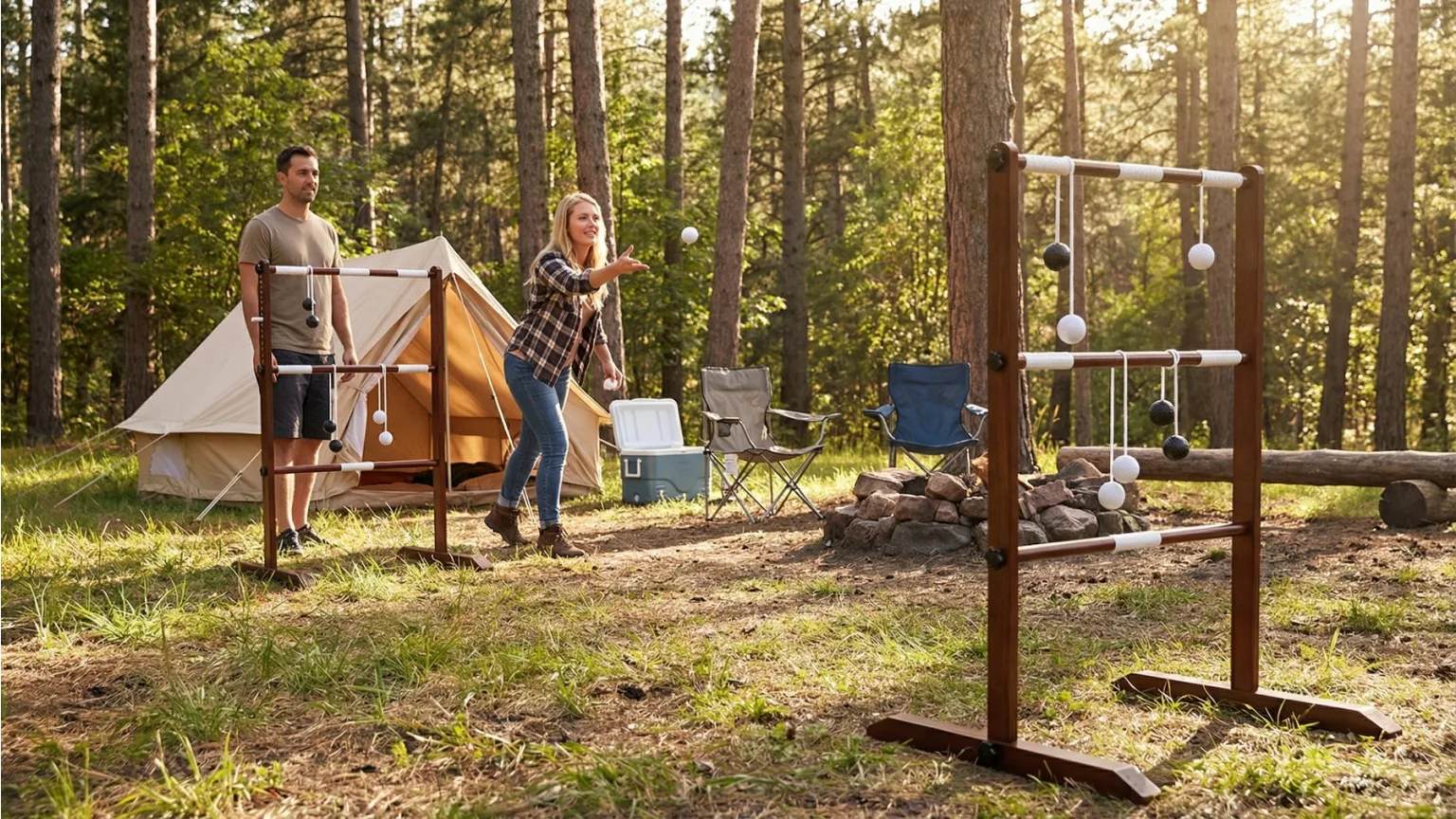
Fling the bola your way with these ladder toss optional rules
Published
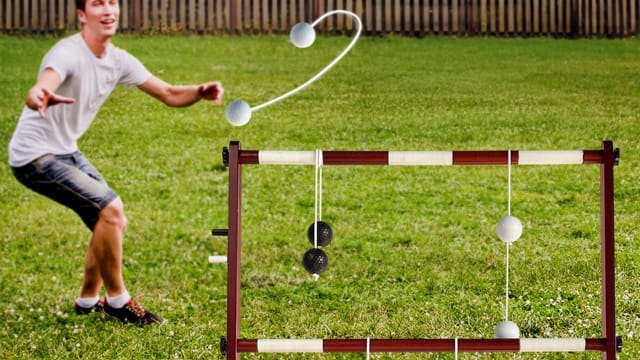
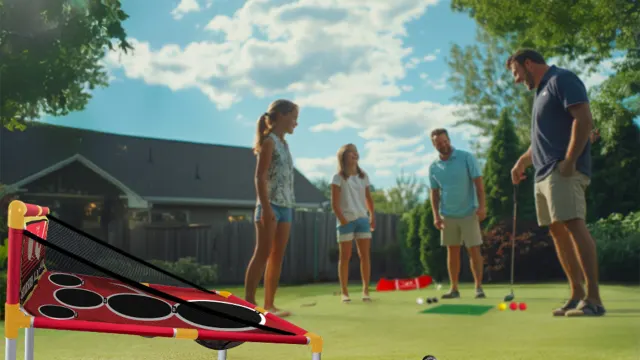
March 6 is National Day of Unplugging, when Americans shun their screens and get reacquainted with offline reality. One of the outdoor games they play is called ladder toss, ladder ball, hillbilly golf, or one of various colorful colloquialisms inspired by a certain resemblance to what Shakespeare called “stones”. And it’s got as many rule variations as it does names.
Nobody knows who was the first to tie two golf balls together, call it a bola, and fling it at a ladder-shaped goal. Ladder ball sprung up as a grassroots, word-of-mouth phenomenon. There’s no Ladder Toss International Federation to enforce one standard on everyone, so you’re free to let your freak bolas fly. Following is a compendium of rule variations you may employ to make your game faster, more difficult, higher-scoring, or more ridiculous.
Throwing distance
Standard: place ladders 15 feet apart.
Easy option: place ladders 10 feet apart.
Challenging option: place ladders 20 feet apart.
Evel Knievel option: place ladders on opposite rims of the Grand Canyon.
Turn-taking
Standard: in each round, the first player throws each of their three bolas, then the other player throws theirs.
High-tension option: players alternate throwing one bola at a time.
Lightning option: players do not take turns and throw their bolas simultaneously at the same ladder.
Lifetime option: each player throws one thousand bolas all at once and never plays the game again. (Additional sets may be required.)
Scoring
Standard: top rung is worth 3 points, middle rung is worth 2 points, bottom rung is worth 1 point.
Reverse option: bottom rung is worth 3 points, middle rung is worth 2 points, top rung is worth 1 point.
Full house option: one bola on each rung is worth a bonus point.
Three-of-a-kind option: all three bolas on one rung is worth a bonus point.
Solitaire option: play by yourself. Score whatever you want. Pump a fist in triumph. Look around and wish you had someone to share it with.

One point for white? Or three points for white and two points for black? Or a million points for you?
Point cancellation
Standard: only one player scores in each round. Subtract the lower player’s total from the higher player’s total and the higher player gets that many points for the round.
Faster game option: count all points scored. No points are cancelled. Both players may score in a round.
Specific rung option: only points scored on specific rungs cancel each other, as above. Both players may score in a round.
Streaming-era option: cancel the game after two rounds even though numerous plot threads will be left forever unresolved.
Winning score
Standard: the first player to score exactly 21 wins. If a player’s score is over 21 at the end of a round, subtract their points for this round from their previous score. So starting a turn with 18 points and scoring 4 means you’d end the turn with 14 points.
Easy option: any score of 21 or over wins the game.
Challenging option: going over 21 takes the player’s score back down to 11.
Zeno’s Paradox option: any point over 20 is worth half the remaining distance to 21. So your first point over twenty makes your score 20.5, your next point 20.75, your next point after that 20.875, and so on to infinity. Recommended only for players who literally live for this game.